
 |
|---|
| Source |
 |
|---|
| Source |
 |
|---|
| by Jason Heeris |
(Mark, Gudith, and Klocke 2008)
https://www.fastcompany.com/944128/worker-interrupted-cost-task-switching
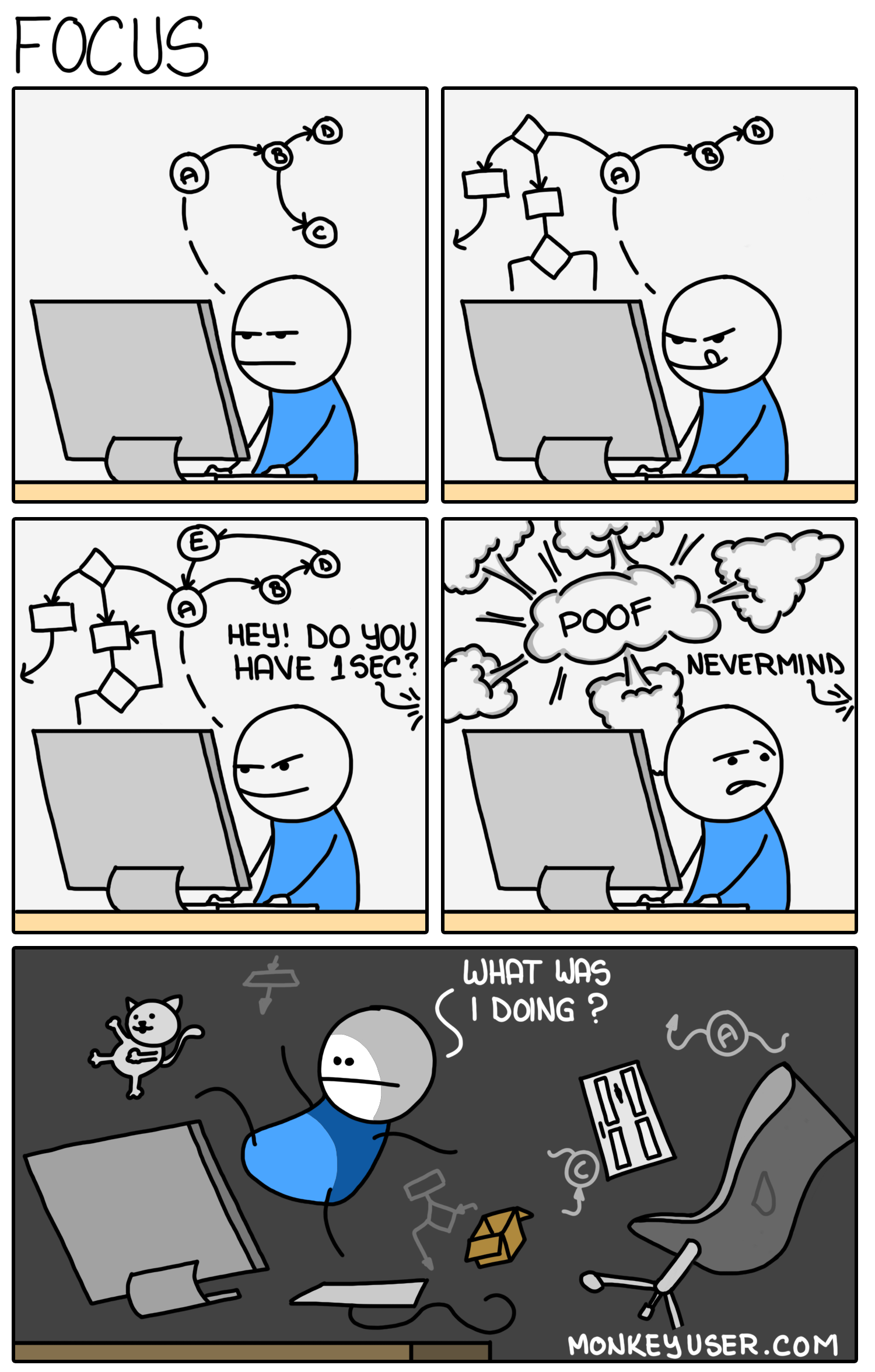
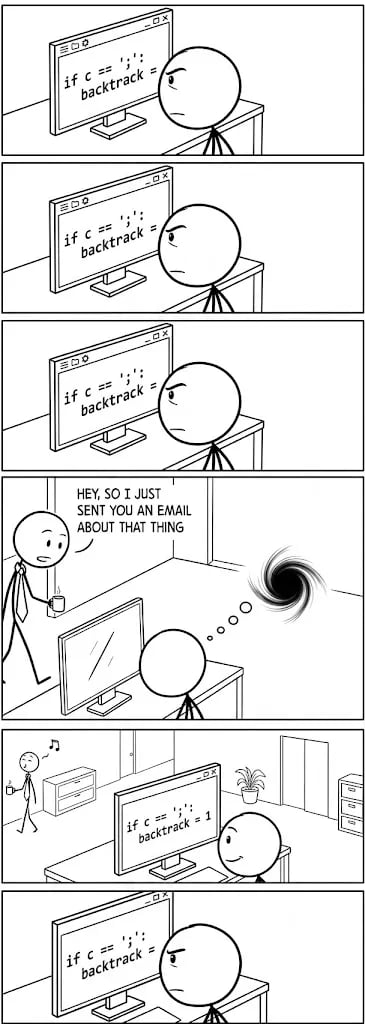
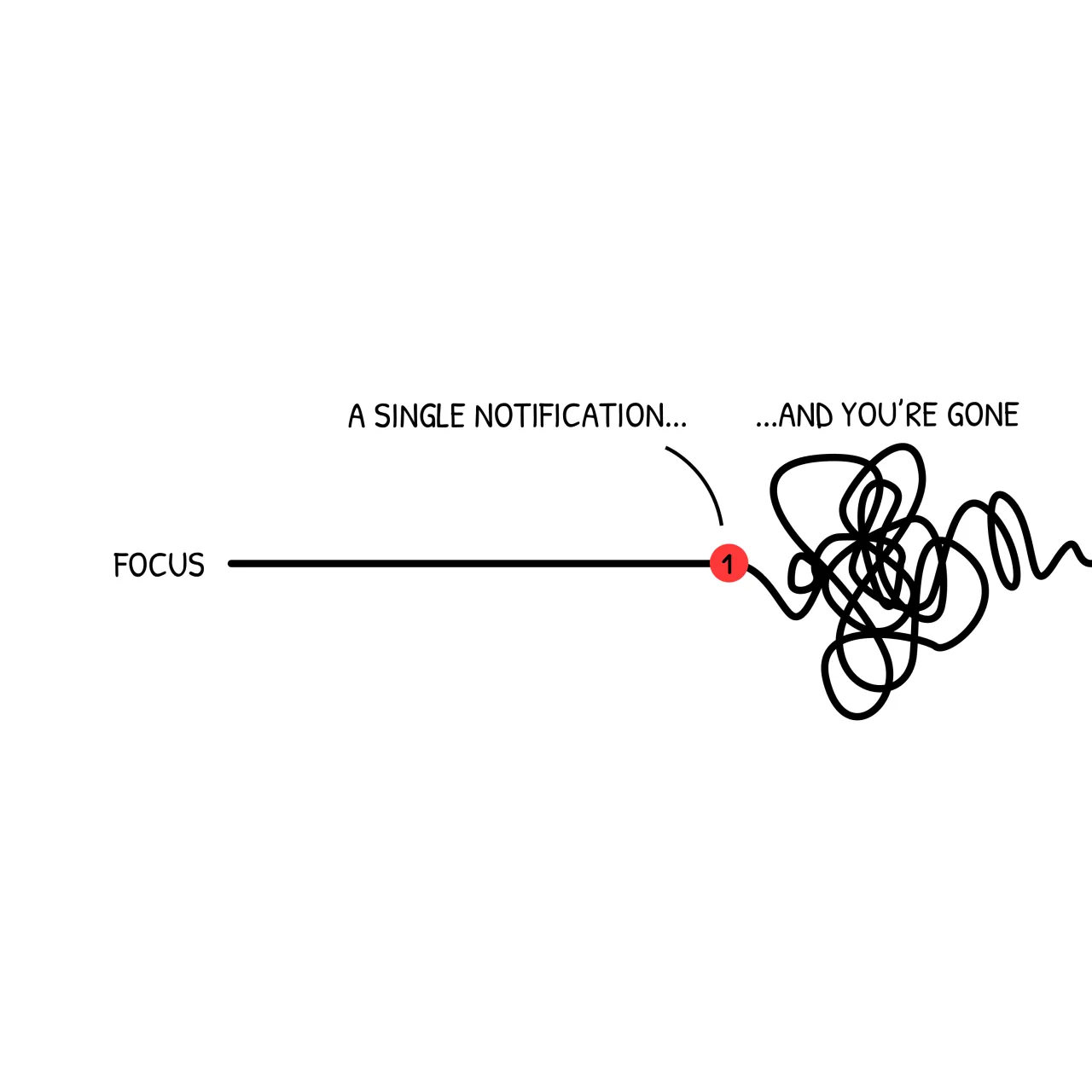
Cognitive psychologist Dr. Gloria Mark of UC Irvine found that after an interruption lasting as little as 2.8 seconds, knowledge workers take an average of over 23 minutes to fully re-immerse/refocus themselves in the original task, a phenomenon known as the “cognitive switching penalty”.
This happens because when interrupted, the brain must re-establish context for the original task, which is a process that can take a significant amount of time.
= Law of Homogeneous Sequences
by Sune Carlson
Interrupted work will always be less effective and take longer than if completed continuously.
- Meeting overload: When a single daily standup runs 45 minutes, 10% of your team’s workweek is gone — before factoring in all the other recurring meetings filling their calendars.
- Calendar fragmentation: A developer with just 90 minutes of scattered meetings throughout the day can lose 4+ hours of potential deep work due to the mental context-switching required before and after each interruption.
- Ad-hoc communications: Junior developers naturally reach out with a “quick” Slack message when they’re stuck, and suddenly your most experienced engineers are spending more time troubleshooting others’ problems than solving their own.
- Maker’s Time vs Manager’s Time
- Developer Flow State and Its Impact on Productivity | Stack Overflow Blog
- Context-switching is the main productivity killer for developers
- Programmer Interrupted: The Real Cost of Interruption and Context Switching
- (Van Solingen, Berghout, and Van Latum Sept.-Oct./1998)
- (Czerwinski, Horvitz, and Wilhite 2004)
- (Mark, Gonzalez, and Harris 2005)
❝ CITATIONS
Czerwinski, Mary, Eric Horvitz, and Susan Wilhite. 2004. “A Diary Study of Task Switching and Interruptions.” In Proceedings of the SIGCHI Conference on Human Factors in Computing Systems, 175–82. Vienna Austria: ACM. https://doi.org/10.1145/985692.985715. ↩
Mark, Gloria, Victor M. Gonzalez, and Justin Harris. 2005. “No Task Left behind?: Examining the Nature of Fragmented Work.” In Proceedings of the SIGCHI Conference on Human Factors in Computing Systems, 321–30. Portland Oregon USA: ACM. https://doi.org/10.1145/1054972.1055017. ↩
Mark, Gloria, Daniela Gudith, and Ulrich Klocke. 2008. “The Cost of Interrupted Work: More Speed and Stress.” In Proceedings of the SIGCHI Conference on Human Factors in Computing Systems, 107–10. Florence Italy: ACM. https://doi.org/10.1145/1357054.1357072. ↩
Van Solingen, R., E. Berghout, and F. Van Latum. Sept.-Oct./1998. “Interrupts: Just a Minute Never Is.” IEEE Software 15 (5): 97–103. https://doi.org/10.1109/52.714843. ↩
