
“What is important is seldom urgent and what is urgent is seldom important.” — Dwight D. Eisenhower
“Plans are nothing; planning is everything.” — Dwight D. Eisenhower
“The distinction between what is urgent and what is important is the key to serenity.” — James Clear
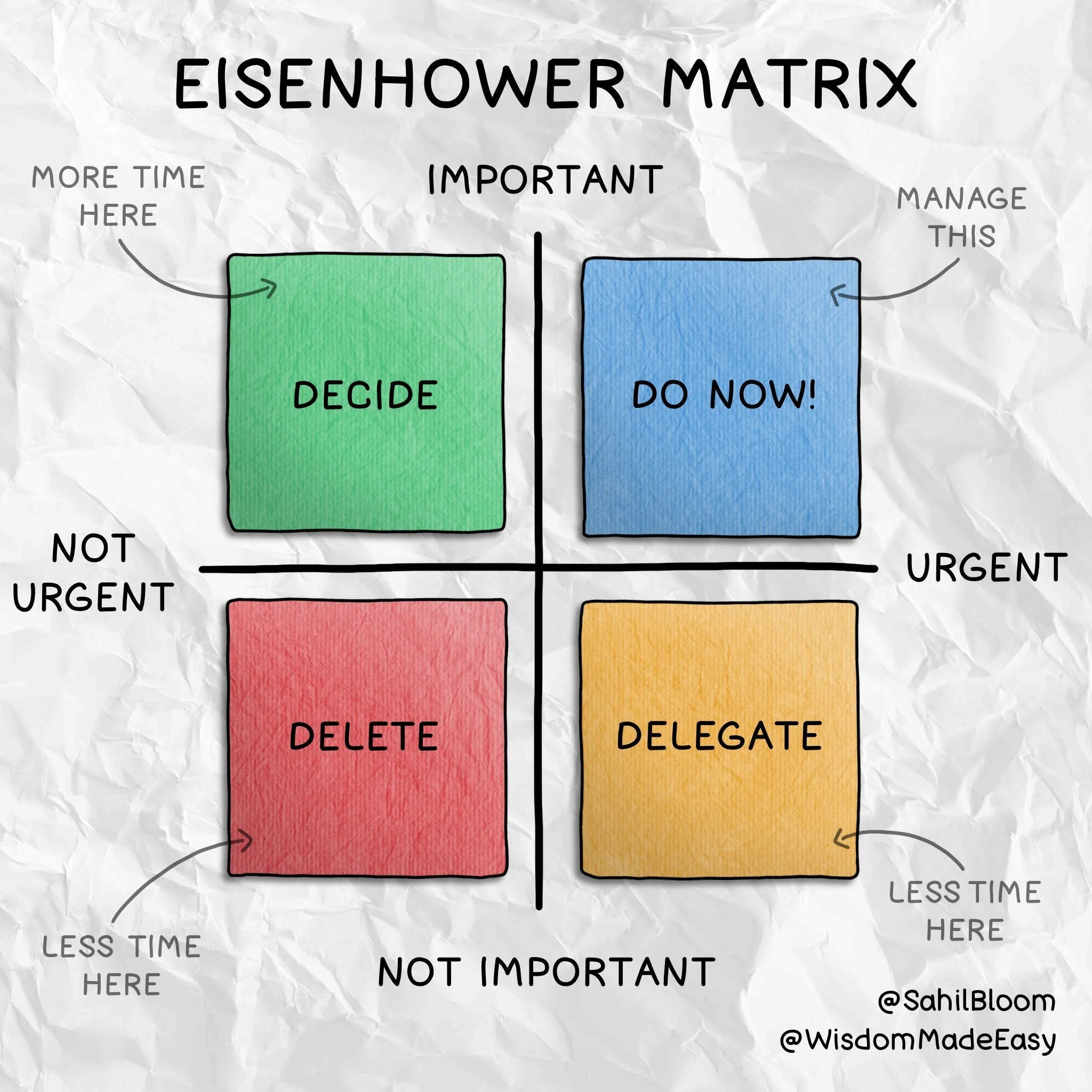
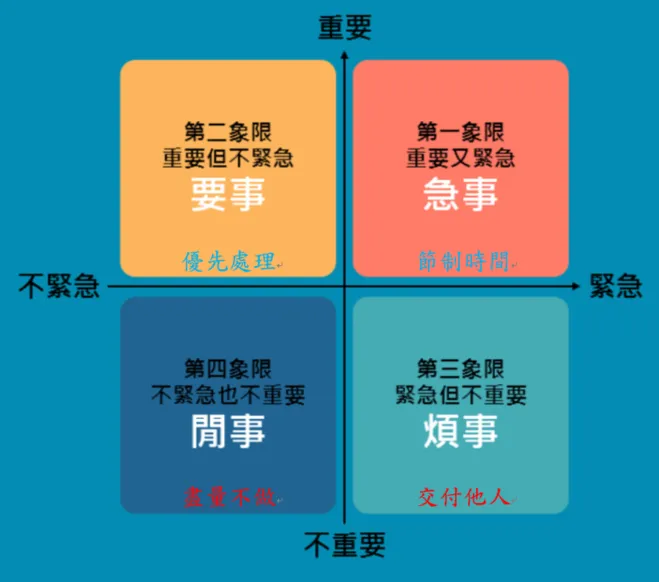
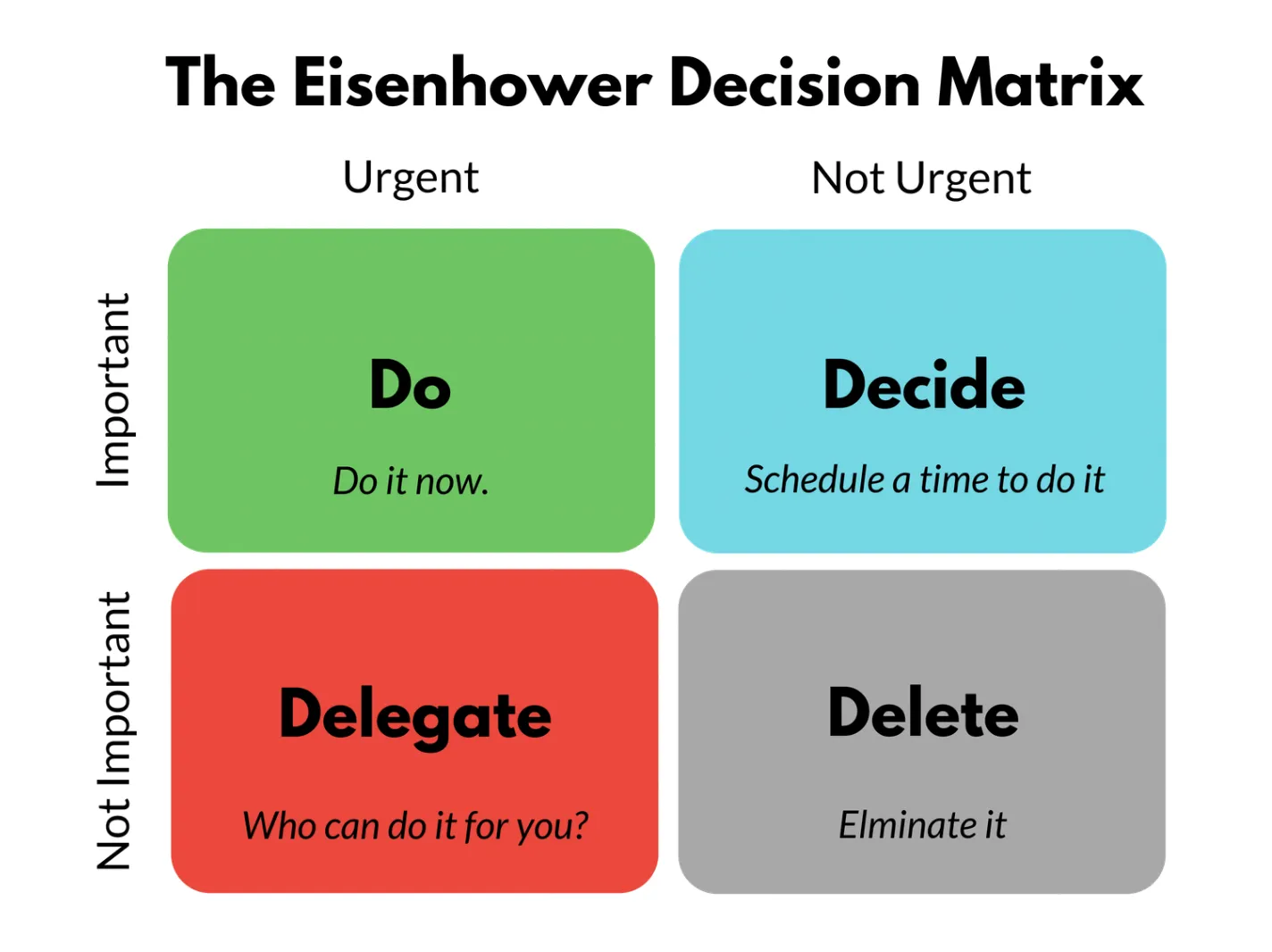
The Eisenhower Matrix, also known as the Urgent-Important Matrix, is a tool for time management and decision-making. It helps individuals and organizations distinguish between tasks that are truly important and those that are merely urgent, allowing for more intentional and effective use of time.
The matrix is divided into four quadrants:
- Important & Urgent: Tasks that require immediate attention and have significant consequences if not completed. Examples include crises, pressing deadlines, and emergencies.
- Important & Not Urgent: Tasks that are crucial for long-term success but do not require immediate action. These include strategic planning, relationship building, personal development, and preventive activities.
- Not Important & Urgent: Tasks that demand immediate attention but are not truly important. These are often interruptions, meetings, or requests from others that do not align with your core goals.
- Not Important & Not Urgent: Activities that are neither pressing nor valuable, such as excessive social media use, trivial chores, or time-wasting distractions.
- Focus most of your energy on Quadrant II (Important & Not Urgent), as this is where growth, learning, and meaningful progress occur.
- Minimize time spent in Quadrant III and IV by delegating, automating, or eliminating these tasks.
- Use the matrix regularly to review your to-do list and ensure alignment with your values and long-term objectives.
Suppose you have a looming project deadline (Quadrant I), a daily habit of reading for personal growth (Quadrant II), frequent email notifications (Quadrant III), and the temptation to binge-watch TV (Quadrant IV). The matrix encourages you to prioritize the project and your reading habit, while managing or reducing the time spent on emails and TV.
