
“True self-confidence is “the courage to be open—to welcome change and new ideas regardless of their source.” Real self-confidence is not reflected in a title, an expensive suit, a fancy car, or a series of acquisitions. It is reflected in your mindset: your readiness to grow.” — Carol Dweck, Mindset: The New Psychology of Success
“Your ability to learn is not fixed, it can change with your effort.” — Carol Dweck
“Why waste time proving over and over how great you are, when you could be getting better? Why hide deficiencies instead of overcoming them? Why look for friends or partners who will just shore up your self-esteem instead of ones who will also challenge you to grow? And why seek out the tried and true, instead of experiences that will stretch you? The passion for stretching yourself and sticking to it, even (or especially) when it’s not going well, is the hallmark of the growth mindset. This is the mindset that allows people to thrive during some of the most challenging times in their lives.” — Carol S. Dweck, Mindset: The New Psychology of Success
“Each problem that I solved became a rule which served afterwards to solve other problems.” — René Descartes
“Dude, suckin’ at something is the first step to being sorta good at something.” — Jake, “Adventure Time”
“If you focus on what you left behind, then how can you see what lies ahead?” — Chef Gusteau, Ratatouille
“We think of ourselves as fixed and the world as malleable, but it’s really we who are malleable and the world is largely fixed.” — Naval Ravikant
= Infinite Mindset = Grow-the-pie Mindset
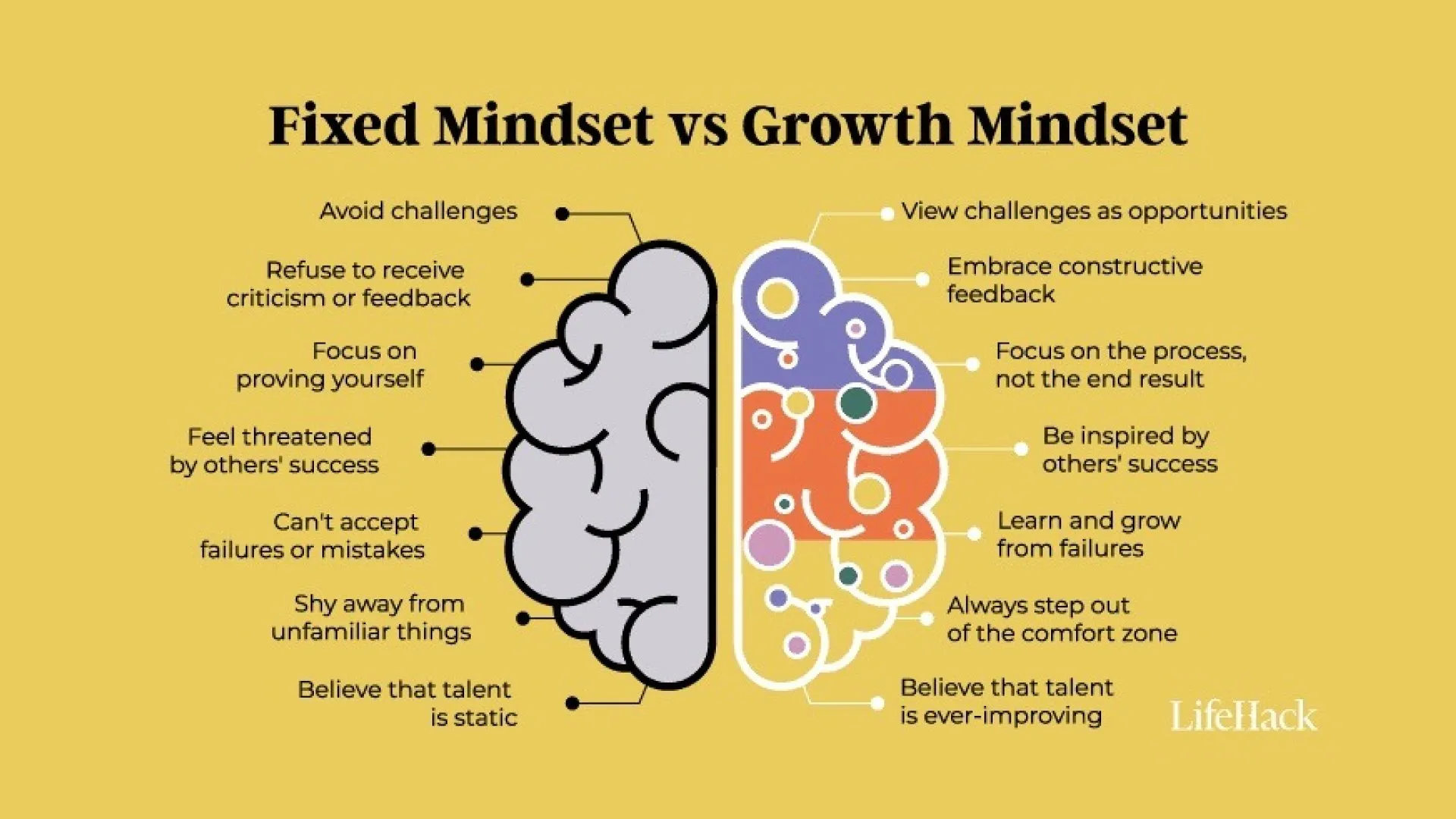
持續修正,不斷嘗試、試錯,重點是 積少成多、聚沙成塔、一次比一次更好的迭代/堆疊 過程 (like interval workouts)。
摸石頭過河(Crossing the river by touching the stones)
不經一事,不長一智。
實事求是,精益求精。
Seek for truth. Strive for Excellency.
Kaizen (改善)
“Talent is a pursued interest. Anything that you’re willing to practice, you can do.” — Bob Ross
Approach everything in life as a skill at which you can increase your competency through practices. You get better at what you practice. What you like to practice is what’s worth pursuing. Getting to perform is just a bonus. Everything is practice. Practice makes perfect. 1
Talent is a cursed word. Those who have it believe that it is adequate by itself, and those who don’t have it believe that they stand no chance of success without it.
How to Make Anything a Skill
- Clearly define success and failure
- Make it practice-able
- Create feedback loops
- Track your progress over time
Get going. Get good. Get smart.
- The moment to move from “Get good” to “Get smart”: You never cringe yourself. You are confident with the quality of your work.
- Strategies only come to the picture at the “Get smart” stage.
The Power of Yet
“Not the ‘not,’ but the ‘not yet.’ — (Aurel and Clay 2006)
- “I’m not good enough” → “I’m not good enough…yet.”
- “I don’t know how to do it” → “I don’t know how to do it…yet.”
- “I’m not capable of that” → “I’m not capable of that…yet.”
- I am strong because I’ve been weak.
- I am fearless because I’ve been afraid.
- I am wise because I’ve been foolish.
當你要完成一個龐大而複雜的專案,例如撰寫一份長篇研究報告,可以先快速地從頭到尾寫一遍,不必擔心錯誤或資料不足,甚至可以略過某些細節,重點是先把內容大致架構起來。
即使初稿再怎麼粗糙或充滿錯誤,它至少讓你從零開始向前邁進了一步,讓報告有了雛形,壓力也會隨之減輕。接下來,你可以在沒有過度焦慮的情況下,逐步修改、精煉,就像雕刻作品一樣,先調整大方向,再逐步打磨細節,從 30 分提升到 60 分、90 分。沒有人能夠一次做到完美,因此,重點在於持續改進,而不是一開始就要求「一步到位」或「盡善盡美」。
Locus of Control is a psychological concept first introduced by Julian Rotter in 1954 that describes how people perceive the causes of events in their lives.
- Those with an External Locus of Control believe that their outcomes are determined by forces outside their control.
- Those with an Internal Locus of Control believe they have control over their outcomes through effort, focus, and attitude.
It’s better to get your dopamine from improving your ideas than from having them validated.
“How to Enhance Performance & Learning by Applying a Growth Mindset” by Huberman Lab
Be ready to change your mind completely at any given time
-
熟能生巧 ⌃
