
“To lead people, walk beside them.” — Lao Tzu
“You lead by letting others know what you expect of them, which may exceed what they themselves expect. Provide them a reputation that they can step up to.” — Kevin Kelly, Excellent Advice for Living: Wisdom I Wish I’d Known Earlier
“The way to help someone is not to critique what makes them smaller, but to encourage what makes them larger.” — James Clear 1
“The greatest sign of success for a teacher is to be able to say, ‘The children are now working as if I did not exist.’ But this holds true for leadership in general—give people space and they flourish.” — Maria Montessori
“Great leaders create more leaders, not followers. Great leaders have vision, share vision, and inspire others to create their own.” — Roy T. Bennett
A man who wants to lead the orchestra must turn his back on the crowd.” — Islwyn Jeneins
“The bad leader is he who the people despise; the good leader is he who the people praise; the great leader is he who the people say, ‘We did it ourselves.’”
“If your actions inspire others to dream more, learn more, do more and become more, you are a leader.” — Simon Sinek
“Treat a man as he is and he will remain as he is. Treat a man as he can and should be and he will become as he can and should be.” — Stephen R. Covey, The 7 Habits of Highly Effective People: Powerful Lessons in Personal Change
“When we select leaders, we don’t usually pick the person with the strongest leadership skills. We frequently choose the person who talks the most. It’s called the babble effect. Research shows that groups promote the people who command the most airtime—regardless of their aptitude and expertise. We mistake confidence for competence, certainty for credibility, and quantity for quality. We get stuck following people who dominate the discussion instead of those who elevate it.” — Adam M. Grant, Hidden Potential: The Science of Achieving Greater Things
太上,下知有之;其次,親而譽之;其次,畏之;其次,侮之。 —《道德經》第十七章
The best leader is one whose existence is barely known by the people. Next is one who is loved and praised. Next is one who is feared. Next is one who is despised. — Lao Tzu
優秀的管理者投資於績效,偉大的管理者投資於潛力。
Leadership is seeing the greatness in others before they see it in themselves.
When you find yourself in a situation where everyone looks at each other, it’s time for you to lead the way.
加忙 → 幫忙
Leading from Any Chair
- We all have the opportunity to make an impact, even when we’re not standing at the front. When you choose to step up, you may discover that that leadership is more complex than it appears and develop greater empathy for those in leadership roles. Learn to lead by constantly asking yourself, “What would I say should I suddenly be called upon to lead?”
- 砌磚工人 (The Three Bricklayers Story)
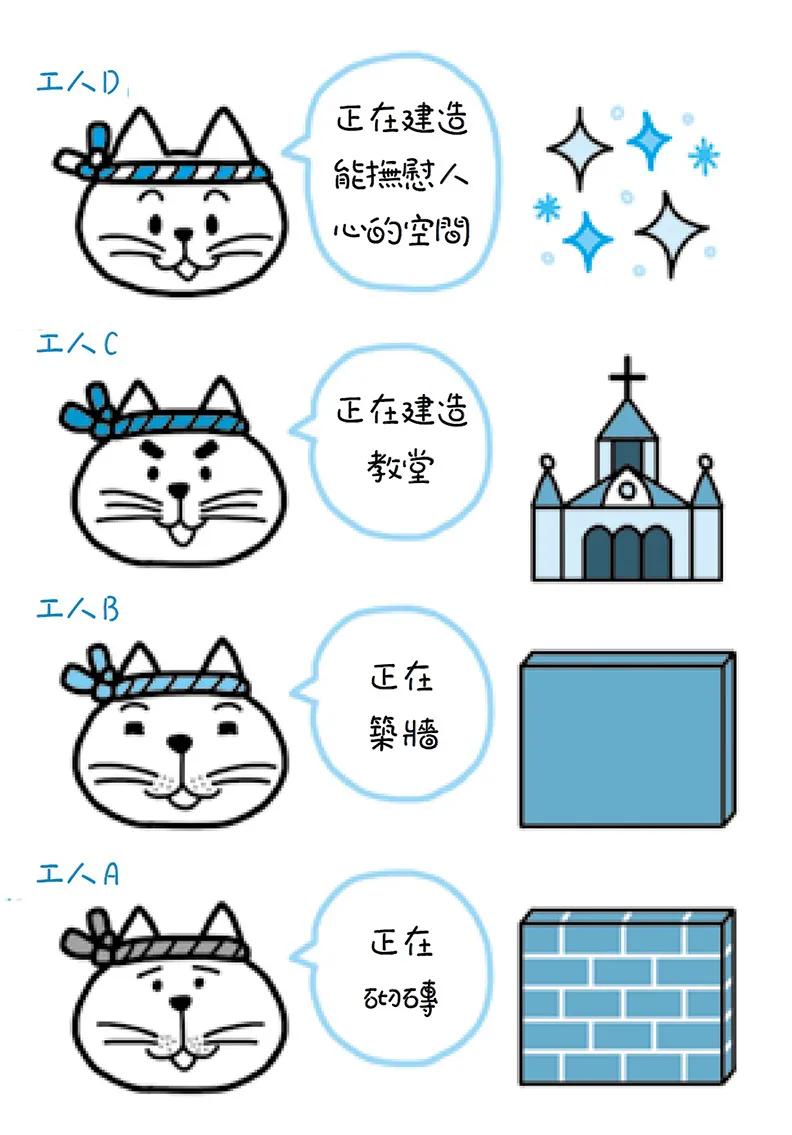
- 造船工人
- If you want to build a ship, don’t drum up the men to gather wood, divide the work and give orders. Instead, teach/inspire them to yearn for the vast and endless sea. Audacious ideas motivate people.
- You should not build something just for the sake of building. You should build something because it will help you to fulfill a dream, in this case, going to sea.
Your identity dictates your actions
The CORE Principle
by Sir David Brailsford, used in British cycling team (TeamGB) and Team Sky])
- Commitment
- Ownership
- Responsibility
- Excellence
Think of a great leader like a captain of a ship: they make sure everyone is safe and settled before they themselves rest.
“I can afford to wait, because I trust myself and my tribe.”
Insecure leaders rush to take first, fearing there’s not enough. Confident leaders create abundance by leading with stability and assurance.
領導、統御一個組織時,有兩種治理方法:
- 以「力」壓人的「霸道」
- 以「德」服人的「王道」(孫文)
Everybody, Somebody, Anybody and Nobody
-
“We cannot teach people anything. We can only help them discover it within themselves.” — Galileo Galilei ⌃
