
Working memory is one’s ability to keep specific information for immediate use, like a little sticky note in the brain.
Working memory is the brain’s workspace—a temporary holding area where we manipulate information to make decisions, solve problems, and understand language.
Working memory refers to the ability to hold information in mind and manipulate it to guide behavior, making it central to human cognition.
Working memory is a special category of memory differing from long-term and short-term memory. Unlike long-term memory, which stores information for future recall, working memory intentionally discards information once it’s no longer needed.
The distinction between working memory and short-term memory is that working memory involves the manipulation of information, not just passive storage.
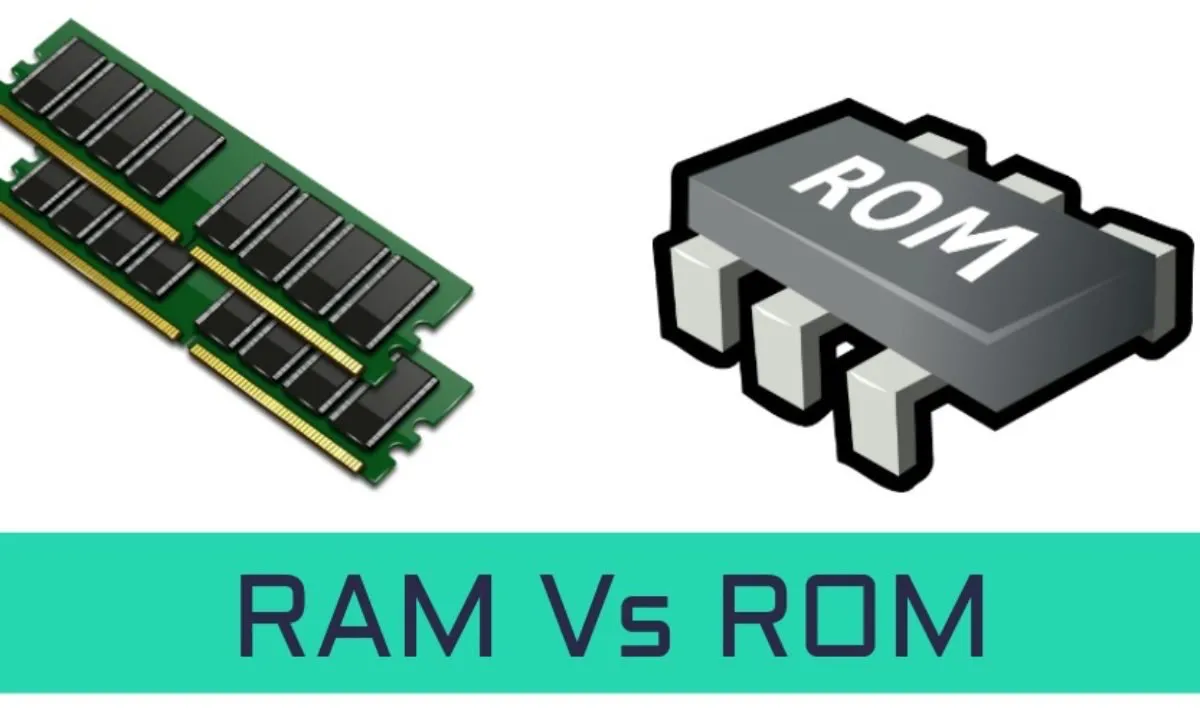
| Memory Type | Analogy | Characteristics |
|---|---|---|
| Working Memory | RAM (Random-Access Memory) | Temporary storage, requires active focus to retain information (“volatile memory”). Used for immediate tasks and processing. |
| Short-Term Memory | Combination of RAM & Cache | Holds information briefly (seconds to minutes). Data is easily lost without rehearsal or attention. |
| Long-Term Memory | ROM (Read-Only Memory) | Permanent storage (“non-volatile memory”). Retains information over extended periods, even without active use. |
Working memory works best when you are fully focused.
For example, if I say, “Remember these numbers: 3, 5, 7,” your working memory holds those numbers while you think about them. But if you get distracted, like if someone starts talking to you about your favorite cartoon, you might forget those numbers.
Working memory is crucial for sequencing daily activities, allowing individuals to remember and process information. Your working memory capacity is important to your ability to task-switch when necessary to move throughout your day in a productive, focused way. Its impairment can lead to significant life challenges.
- Solving puzzles: You keep the steps in your head while you figure out the next move.
- Remembering telephone numbers: Let’s say someone tells you their phone number: 4-2-3-7-6-8-5. Your working memory is like a little helper holding those numbers in your head while you get your phone. You might repeat the numbers to yourself—4-2-3, 7-6-8-5—over and over so you don’t forget them before typing.
Working memory is closely ties to tied to attention.
Attention determines what enters working memory, and working memory determines what we can consciously process.
Working memory capacity/span correlates to the dopamine levels in the prefrontal cortex. The relationship between working memory and dopamine follows an inverted U-shaped function.
- Higher dopamine correlates with better working memory, while lower dopamine correlates with lower working memory.
- Dopamine plays a crucial role in task switching and eliminating distractions in working memory
Tools to increase dopamine levels and potentially improve working memory performance:
-
NSDR or Yoga Nidra (瑜伽睡眠)
-
Deliberate cold exposure, such as cold showers or plunges, 30–60 minutes before engaging in a task
-
Listening to 40-Hz binaural beats
Several studies (Beauchene et al. 2016) (Engelbregt et al. 2021) show increases in working memory performance when listeners use binaural beats while doing mental tasks.
-
Supplementing with L-tyrosine
The most influential framework for understanding working memory is Baddeley’s multi-component model, which breaks working memory into several specialized subsystems:
| Component | Function | Analogy |
|---|---|---|
| Central Executive | Directs attention, coordinates subsystems, manages task switching | The conductor of an orchestra |
| Phonological Loop | Holds and manipulates verbal and auditory information (speech, numbers, words) | A voice echoing in your head |
| Visuospatial Sketchpad | Holds and manipulates visual and spatial information (images, layouts, movement) | A mental whiteboard for drawing |
| Episodic Buffer | Integrates information across subsystems and links to long-term memory | A temporary mixing board |
George Miller’s 1956 paper, “The Magical Number Seven, Plus or Minus Two,” famously proposed that short-term memory could hold roughly 7 items.
However, more recent research by Nelson Cowan suggests the true capacity of working memory is closer to 3–5 chunks of information for most adults, especially when manipulating rather than merely holding information.
Chunking is the key strategy for working around this limit. By grouping individual items into meaningful units—grouping digits of a phone number (4-2-3, 7-6-8-5) or remembering a grocery list by category (produce, dairy, grains)—you effectively compress information into fewer, denser chunks.
Working memory capacity is the bottleneck through which all conscious learning must pass. Cognitive Load Theory (Sweller, 1988) identifies three types of cognitive load that compete for working memory resources:
| Load Type | Definition | Example |
|---|---|---|
| Intrinsic Load | Inherent complexity of the material itself | Solving a multi-step math problem |
| Extraneous Load | Unnecessary cognitive demands from poor presentation | Searching for a button in a cluttered interface |
| Germane Load | Productive effort devoted to learning and schema construction | Connecting a new concept to existing knowledge |
To maximize learning and performance, reduce extraneous load (clean up your environment and tools), manage intrinsic load (break complex tasks into smaller steps), and allocate freed-up working memory to germane processing (deep understanding).
While raw capacity declines over time, compensatory strategies (chunking, external notes, routines) can maintain high performance. The practice of maintaining a second brain is itself a working memory augmentation strategy.
The best-supported strategy is not training working memory in isolation (e.g. N-back Task), but rather reducing unnecessary demands on it—through externalizing information (notes, checklists), building habits and routines, and protecting focused attention.
A note is not a memory aid—it is a thinking tool. By writing things down, you free your working memory to think, not just hold.
